
Year 3 Spring 2026
Curriculum
Welcome to the Spring Term!
We are excited to begin a brand‑new term filled with fresh opportunities for learning, discovery, and creativity. Over the coming weeks, Year 3 will be diving into new and exciting topics across all our subjects. From exploring fascinating ideas in the classroom to developing new skills and challenging ourselves in different ways, this term promises to be full of curiosity, growth, and plenty of memorable moments.
To find out more about what we’ll be covering, please take a moment to read the curriculum breakdown included in this newsletter.
We’re looking forward to a wonderful spring term together!
R.E.
In this branch, the children explore the significant journeys Jesus made from Galilee to Jerusalem. They will learn about the people he met, the teachings he shared, and why these events remain important to Christians today. We also reflect on how these stories help shape Christian values and celebrations, encouraging qualities such as kindness, courage, and thoughtful decision‑making.
Branch 4: Desert to GardenThis branch introduces the children to how Christians prepare for Lent by reflecting on key moments from Jesus’ ministry. We begin by looking at some of his miracles—such as the feeding of the 5,000—and how they reveal compassion, care, and God’s provision. The children then explore the significance of the Mass and its connection to the Last Supper, helping them understand why this event is so central to Christian worship.
As the unit progresses, the children consider how these moments lead into the preparation for the death of Christ, exploring themes of sacrifice, remembrance, and hope. Through discussion, storytelling, and creative activities, they develop a deeper understanding of how these events shape Christian belief and the meaning of Lent today.
Across Both BranchesThroughout both units, pupils deepen their understanding through storytelling, artwork, discussion, and reflection, helping them build a thoughtful and respectful awareness of the Christian faith.
English
Stig of the Dump
Maths
This term, Year 3 will build their skills in multiplication and division, exploring different representations, using bar models, understanding commutativity, and identifying factor pairs. They will learn how multiplication and division are linked and use this to solve related facts, missing‑number problems, and work confidently with the 3, 4, and 8 times tables.
Later in the term, pupils will move on to Time, learning to read analogue clocks to the nearest minute and compare units of time, followed by Fractions, where they will explore fractions of shapes and quantities, recognise unit and non‑unit fractions, and compare fractions with the same denominator.
Throughout the term, children will continue to develop their reasoning and problem‑solving skills through practical tasks and regular fluency practice.
Science
Humanities
History:
Geography:
P.E.
Music
PSHE
Art and DT
Guided Reading
Computing
Music
All pupils in Year 3 have thoroughly enjoyed expressing themselves in their music lesson! All pupils showed resilience and perseverance when learning to play the recorder.
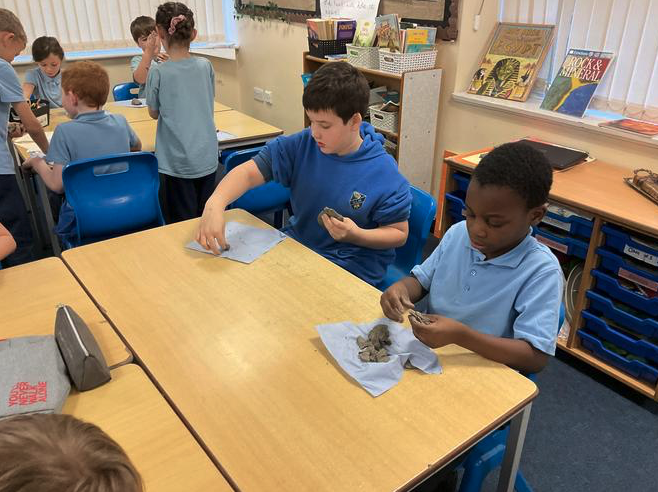
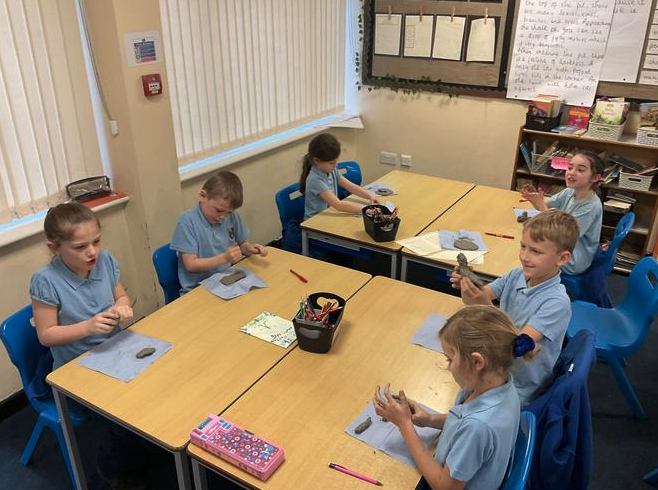
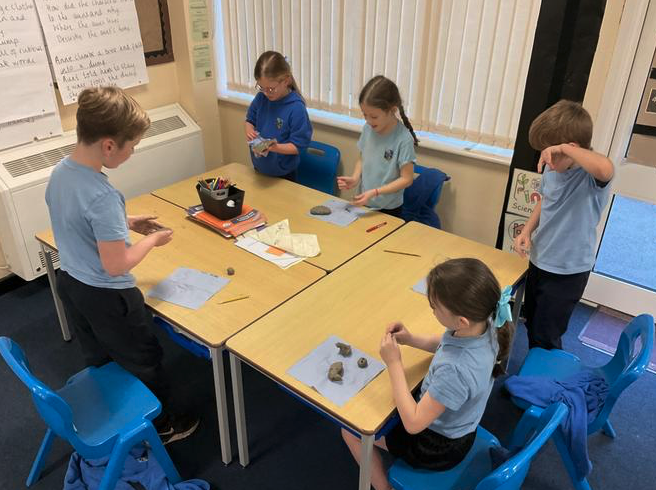
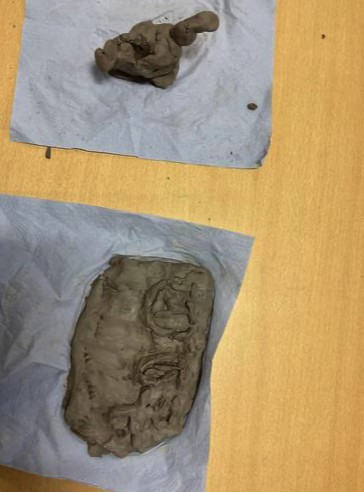
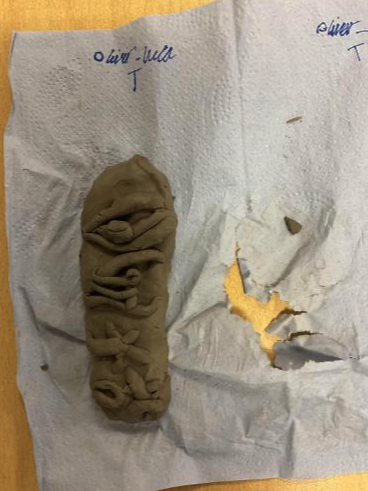
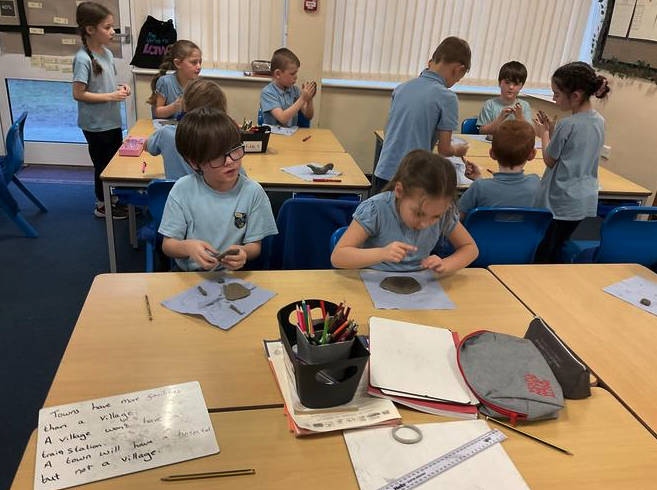
History
World Book Day
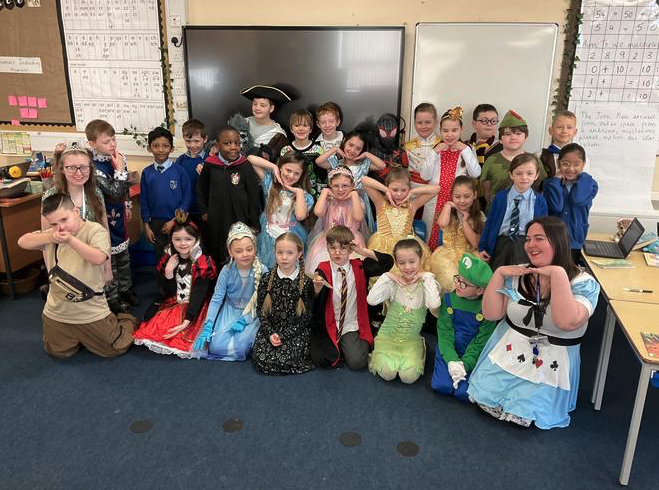
Pupils had a wonderful and exciting day in school celebrating their favourite books and authors. We were introduced to a superb book called The Day I Fell into a Fairy Tale by Ben Miller. The pupils were enthralled and were very excited to predict and write an excerpt from the story using their imagination. What a fantastic job they did!
Art
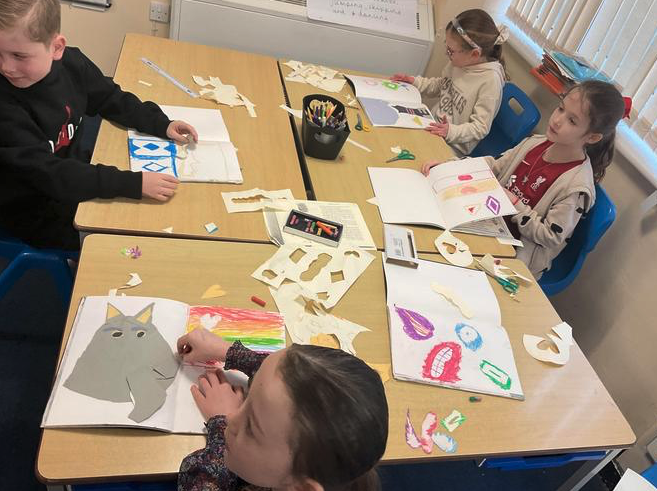
The pathway for learning this term focused on working with shape and colour. Pupils were inspired by key artworks and their own work in creative response. Pupils used shape and colour as a way to simplify elements of the world and noted that shapes have both a positive and negative element. Pupils used shapes to create exciting compositions and learned that imagery can be built through layering shapes.
PE
Our physical education objective is dance this term and pupils needed to consider how electricity travels. Pupils devised movements in groups to imitate electricity.